
Trying Traditional Chinese Medicine (TCM) in Shanghai, China

While growing older is a privilege not everyone gets to experience, it certainly comes with a few disadvantages. I’m no longer as spry as I was when I was younger. I can’t do physical activities as recklessly as I did in my 20s without risking injury, and recovering from a night of drinking or a lack of sleep now takes much longer than it used to.
While I’ve started taking anti-aging supplements and doing weight training, I also wanted to explore other approaches that could complement my efforts toward a healthier lifestyle. That curiosity led me to visit a Traditional Chinese Medicine (TCM) hospital during my recent trip to China.
What is TCM?
Traditional Chinese Medicine (中医, Zhōngyī) is a medical system that originated in China thousands of years ago and is still widely used today alongside modern Western medicine.
TCM is based on concepts that differ from Western medicine, including:
- Qi (气): the body’s vital energy
- Yin and Yang (阴阳): opposing yet complementary forces that should be balanced
- Meridians (经络): pathways through which Qi flows
According to TCM, illness may occur when these forces and systems fall out of balance.
Common TCM treatments include:
- Herbal medicine – Customized herbal formulas made from plants, roots, flowers, and other natural ingredients.
- Acupuncture – Very fine needles inserted into specific points on the body to help relieve pain and restore balance.
- Cupping – Glass or plastic cups placed on the skin to create suction.
- Tui Na – A form of therapeutic Chinese massage
- Dietary therapy – Food is viewed as part of treatment, with recommendations based on your body’s condition.
Where to try TCM in Shanghai?
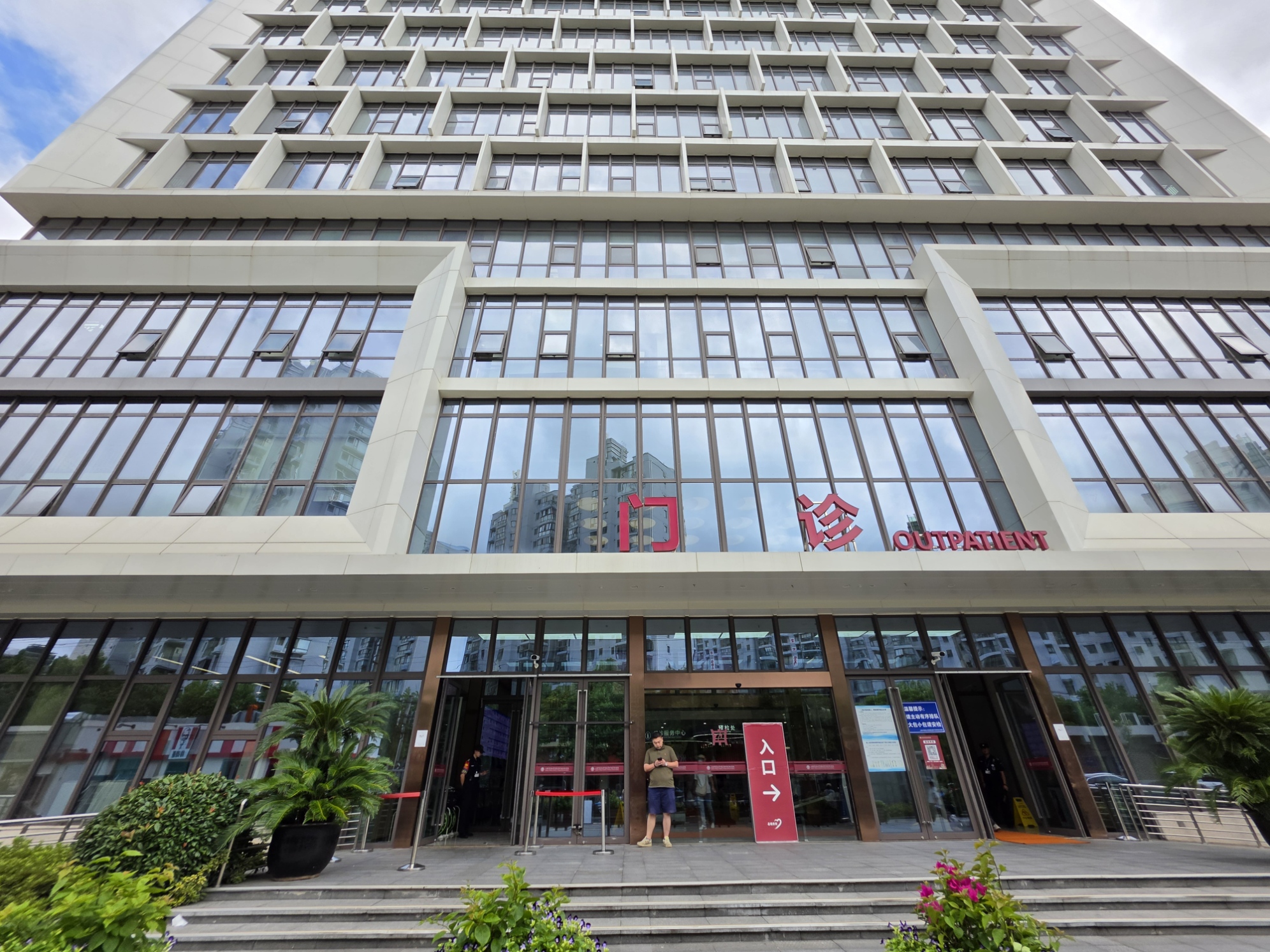
Shanghai has no shortage of TCM clinics and hospitals, but I chose Yueyang Hospital, Shanghai University of Traditional Chinese Medicine. It’s located in Hongkou District.
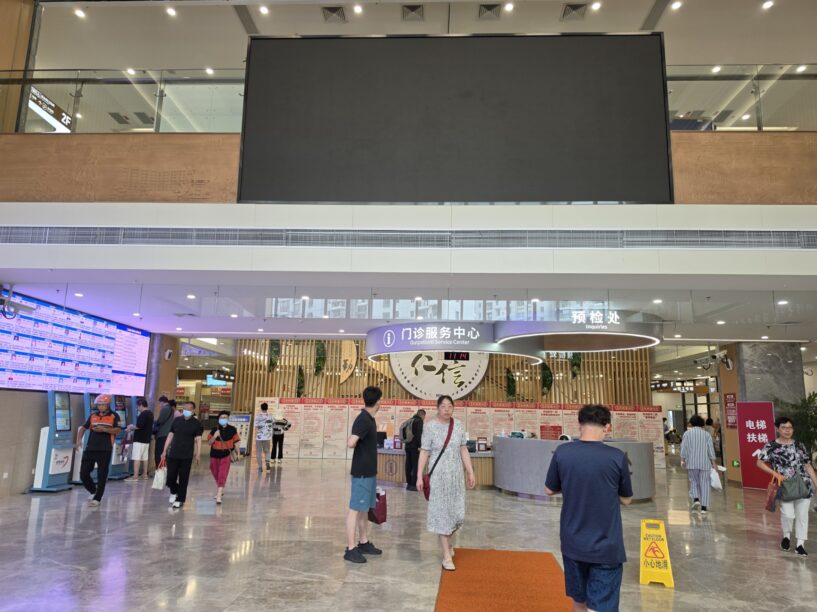
Founded in 1952, Yueyang Hospital was the first TCM hospital established by the Shanghai government.
Today, it is one of China’s leading hospitals for integrated traditional Chinese and Western medicine, known for its high-quality patient care, medical education, and research. The hospital has built a strong reputation both in China and internationally for combining traditional healing practices with modern medical treatments.
Can I get TCM treatment as a foreigner?
Yes. Yueyang Hospital has English-speaking TCM physicians who regularly see international patients.
What are the hospital’s operating hours?
The operating hours for the International Medical Department are:
- Monday to Saturday: 08:00-16:30
- Sunday: 08:00-11:00
How much is a TCM consultation?
The registration fee is CNY 27 (about USD 4 or PHP 248).
How to get a TCM consultation
For foreigners, go straight to Building 5 of Yueyang Hospital. Approach the reception desk and ask for a form. After filling out the form, head to the 6th floor and proceed to the Outpatient Registration and Payment counter to pay the registration fee.
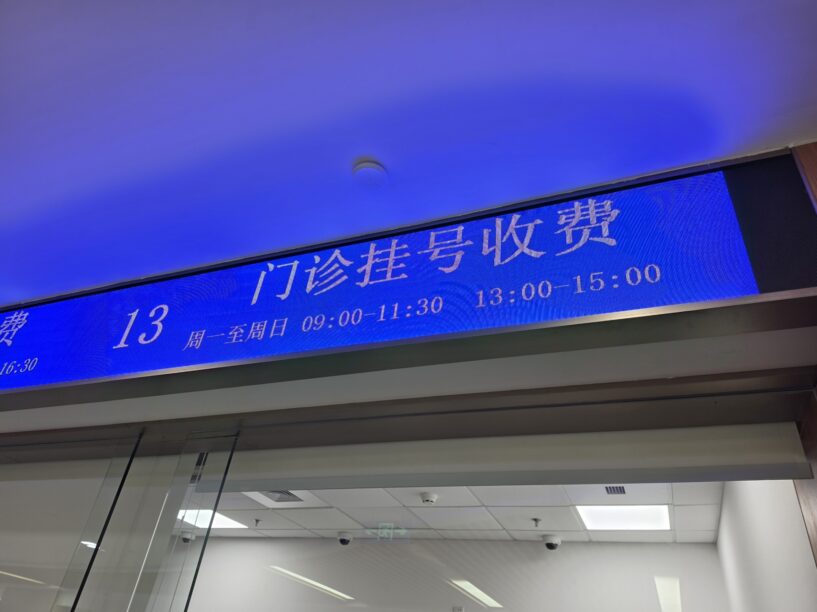
You will receive an ID that you’ll use for all transactions within the hospital, as well as a consultation sheet.
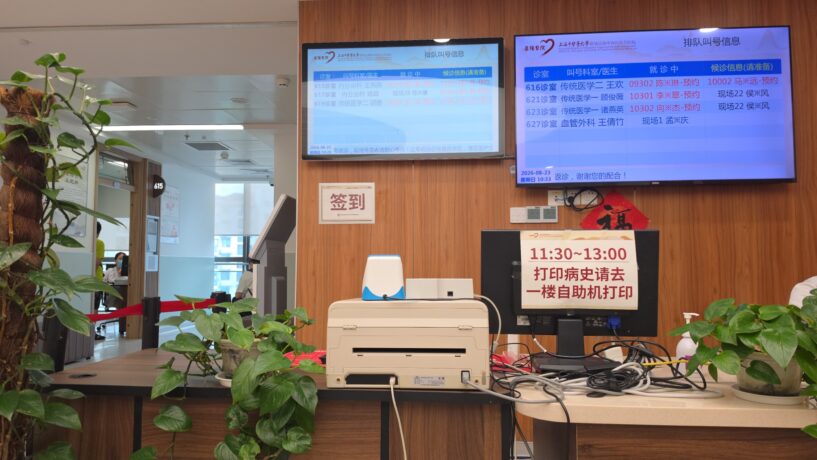
On the same floor, go to the consultation area and scan the QR code on your registration receipt using one of the self-service machines. The machine will print your queue number. Sit in the waiting area and monitor the screen for your turn.
In my case, I didn’t have to wait very long. Once my number was called, I went to the consultation room indicated on the monitor. Outside the room was a display showing the attending physician’s photo and name, along with information about the current patient being seen.

What to expect during a TCM consultation
Most people in China do not speak English fluently, but fortunately, Yueyang Hospital has English-speaking doctors who cater to foreign patients.
My doctor’s name was Gu Junwei. She checked my pulse while asking a series of questions about my health concerns. I told her about my sleep problems, lower back pain triggered by lifting heavy objects and prolonged sitting, and an unexplained stomach issue that occasionally wakes me up in the middle of the night.
She advised me to consult a medical doctor regarding my stomach concerns. As for my lower back pain, she explained that it was related to what TCM describes as a weakness or imbalance within the body.
The only prescription she provided was intended to help improve my sleep. She instructed me to dissolve the medicine in hot water and take it three times a day, 30 minutes after meals. The medication was available at the hospital pharmacy on the ground floor and cost CNY 90 (about USD 13 or PHP 828).
I had expected her to recommend acupuncture or some other form of TCM treatment, but she didn’t. Perhaps my condition simply didn’t require it.
From registration to collecting my prescription, the entire process took less than an hour. As someone coming from the Philippines, where medical consultations can sometimes involve long waits, I found the experience surprisingly efficient.
Final Thoughts
Medical tourism may not be the first thing that comes to mind when people think about visiting China, but it ended up being one of the most memorable parts of my trip.
Whether or not you believe in Traditional Chinese Medicine, experiencing it firsthand provides valuable insight into a medical tradition that has been practiced for thousands of years and remains an important part of China’s healthcare system today.
For me, the consultation was affordable, efficient, and genuinely interesting. While I left with herbal medicine rather than acupuncture needles, I appreciated the opportunity to see how TCM is integrated into modern Chinese healthcare.
Given the chance, I would happily visit another TCM clinic in the future and explore more of the treatments that have made this practice such an enduring part of Chinese culture.